
势不可挡
处暑至,秋意始!今天福建人都干些啥?_我的网站

一 |
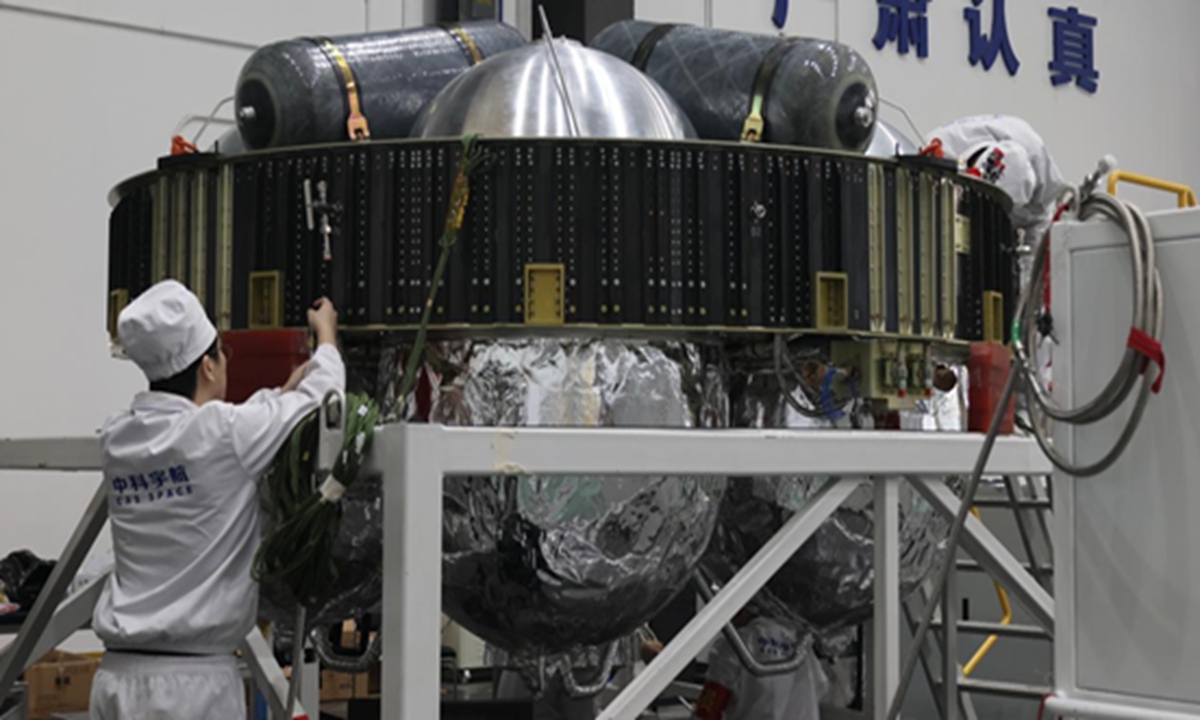
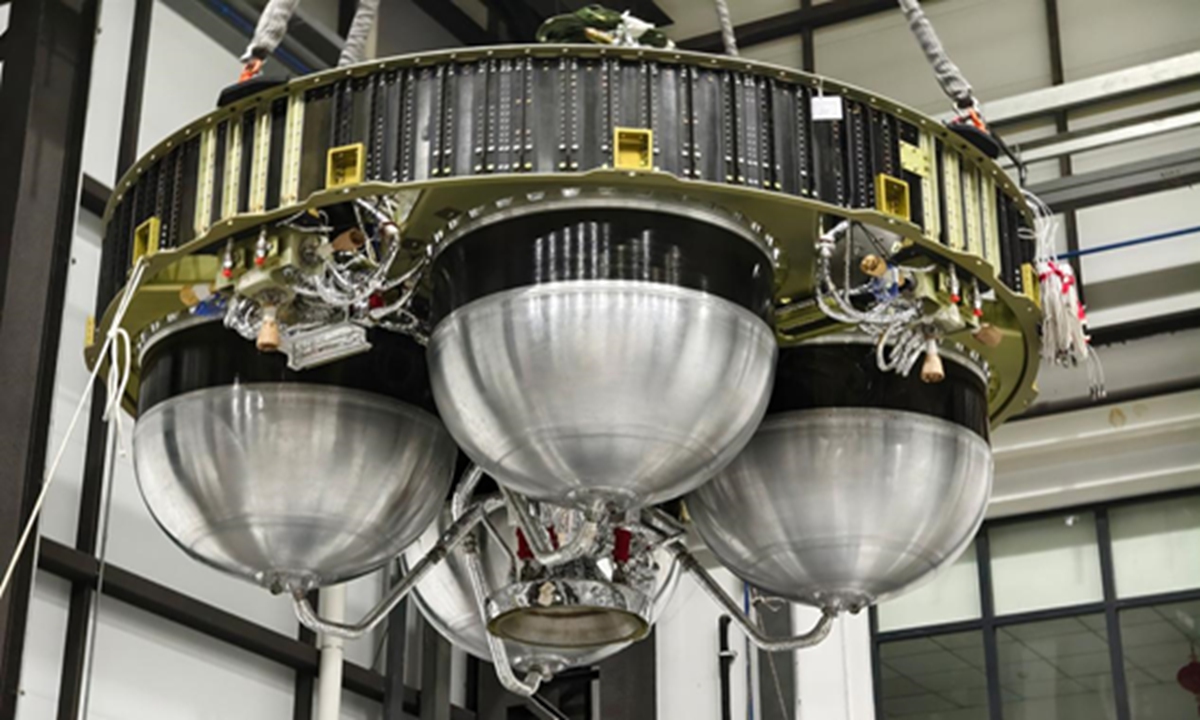
Lixun-1 upper stage, a versatile "space tug" developed by China's commercial space firm CAS Space, is scheduled to make its maiden flight in the first quarter of 2027 after completing a series of key propulsion-system tests, the developer and its chief designer told the Global Times on Tuesday.
The "tug" is designed to ferry satellites from one orbit to another and support missions ranging from constellation deployment to lunar exploration.
While the main stages of a rocket carry payloads from the ground into an initial orbit, an upper stage takes over once the craft is in space. By repeatedly restarting its engine and changing orbit, Lixun-1 can deliver satellites to higher or different orbits, distribute multiple spacecraft to separate destinations during a single launch, or send probes onto trajectories toward the moon and beyond, Global Times learned from the developer.
Yang Haoliang, chief designer of the Lixun-1 upper stage, compared the system to a shuttle service. "If the regular stages of a launch vehicle are like a long-distance bus," - they carry the upper stage and satellites from Earth to a near-Earth parking orbit - the upper stage then takes over as a "space tug," carrying its satellite "passengers" onward to their designated orbital "stops," Yang explained.
That capability can have a direct impact on how efficiently satellites are launched and operated, Yang said. If a satellite has to climb from an initial orbit to its final destination using its own engine, the process can consume a considerable amount of onboard propellant and reduce the fuel available during its operational life. An upper stage can instead perform that orbital transfer, helping conserve satellite fuel and potentially extend its service life.
It can also make one rocket launch do more work. Instead of releasing a batch of satellites into roughly the same orbit, Lixun-1 can repeatedly ignite its engine and maneuver between deployments, sending different satellites to different altitudes and inclinations. Yang said this would help accelerate constellation deployment while improving the efficiency of individual launches.
The practical ambitions behind the system are backed by a major technical milestone reached this month. In August, Lixun-1 completed its PV-001 integrated propulsion-system coordination firing test, during which the entire system operated smoothly for 566 seconds.
Yang told the Global Times that the current Lixun-1 upper stage has a thrust of 20 kilonewtons and can achieve a specific impulse of 315 seconds, which he described as reaching an internationally leading level. The August firing covered the planned profile for the maiden mission, an important step before the system proceeds to flight testing.
The test was more than a demonstration of the engine itself. As an important system-level verification during development, it examined the coordination and engineering reliability of the engine pressurization system, propellant delivery system, propellant management system and servo-control system under the fully integrated configuration.
Of a series of tests that accumulated 5,211 seconds of firing time, the latest one focused on three core technologies: a high-thrust, high-performance 20-kilonewton upper-stage engine capable of multiple starts; balanced propellant delivery from multiple parallel tanks; and a highly reliable integrated electrical system. Their successful verification means Lixun-1 has completed its system-level testing and is ready to move into the flight-test phase, according to the developer.
Lixun-1 has been designed as a modular and generally adaptable upper stage rather than a system tied to only one rocket. It is intended to work with CAS Space's Kinetica-2 and Kinetica-2 heavy-lift variants as well as other launch vehicles, Yang said.
When paired with the Kinetica-2 family, Lixun-1 could significantly expand the rocket's mission range. For communications missions, it could deliver satellites to geosynchronous transfer orbit or even directly to geosynchronous orbit, conserving satellite propellant while supporting the deployment of high-throughput satellites and future 6G communications spacecraft.
For multi-satellite missions, the combination could distribute spacecraft to different orbital altitudes and inclinations during a single launch, potentially serving both low-Earth-orbit constellations and medium- or high-orbit payloads. For deep-space missions, it could place probes onto Earth-moon transfer trajectories and support lunar exploration, Yang said.
The upper stage is designed to be able to conduct more than 20 engine ignitions, autonomously plan orbital-transfer routes and operate under the vacuum and extreme temperature conditions of space. After completing payload deployment, it can also carry out orbital disposal maneuvers to reduce space-debris risks.
Yang said the Lixun-1 and Kinetica-2 combination is designed to cover the vast majority of commercial satellite launch requirements while retaining the ability to participate in major national space projects. More broadly, the upper stage forms part of CAS Space's effort to build launch capabilities reaching medium and high Earth orbits and deep space, extending the reach of China's commercial space sector toward higher orbits and more distant destinations.
。 AI摘要 8月23日迎来处暑节气,暑热渐消。福建民间有出游赏秋、吃鸭、食梨粥及开渔等习俗。

二 | 此时节昼夜温差大,养生宜早睡早起、防寒保暖,饮食注重滋阴润燥,顺应季节变化。 “离离暑云散,袅袅凉风起。

三 | 池上秋又来,荷花半成子。” 今天(8月23日)10时18分 我们迎来“处暑”节气 制图:缪林西 “处”有“终止、躲藏”之意 处暑的到来 意味着暑热正式进入尾声 在这个时节 瓜果飘香,鱼鲜鸭肥 秋日的大美之色即将次第铺开 处暑·三候 一候鹰乃祭鸟 鹰自此日起感知秋之肃气,开始大量捕猎鸟类,但人们发现,鹰捕获猎物之后,不是马上就吃,而是将猎物堆积在巢穴附近,古人认为老鹰是在举行祭鸟的仪式。 二候天地始肃 处暑后,秋风萧索,大地在这股肃杀中变得更加庄严而清新。植物们褪去了往日生机勃勃的绿色,逐渐换上金黄的外衣。 南平武夷山。图源:陈美中 三候禾乃登 “禾”指的是各种稻谷,“登”就是成熟、收获的意思。处暑是水稻成熟的时候,我国南方大部分地区都处在收割中稻的农忙时节。

四 | 此外,一些夏秋作物也即将成熟。 处暑·习俗 在福建,民间有不少处暑传统习俗。 01出游赏秋 清风送爽,暑气渐消,正是一年中郊游的好光景。民间素有“七月八月看巧云”之说,此时的云朵疏朗轻盈,变幻万千。

五 | 趁温度恰宜、秋景初萌,约上亲友踏郊野、登高处,看天高云淡,闻稻香弥漫。 泉州清源山 泉州,是一座非常适合秋季来旅游的城市。暑热刚退,不燥不寒,一切都恰到好处。 清源山。

六 | 图源:中国清源山 秋季来泉州,自然不能错过被誉为“母亲山”的清源山。你可以踏着古色古香的台阶,来到老君岩旁边,和老子来个合照;也可以来到南台岩,抬头仰望蓝天,低头俯瞰山下的泉州城。脚踩遍地落叶,一步一步地感受秋的气息。 莆田九龙谷国家森林公园 若想寻一处幽静,不能错过九龙谷。

七 | 九龙谷国家森林公园森林覆盖率达95%以上。这里空气清新、环境静谧,有益于陶冶情操,调节身心健康。 九龙谷国家森林公园。图源:莆田文旅 景区内以山水景观为主题,融“山、谷、水、石、瀑、洞、林”为一体,峰峦起伏,林木苍郁,湖光山色,倒影成趣。 02吃鸭肉 处暑意味着凉秋的开始,此时饮食应遵从润肺健脾的原则,以滋补和润燥的食物抵御“秋燥”。俗话说“处暑送鸭,无病各家”,福建民间有处暑吃鸭子的传统,鸭肉味甘、咸、性凉,具有滋阴养胃、利水消肿的作用。

八 | 姜母鸭 在厦门,吃姜母鸭是秋补第一选择。黄芪、当归、枸杞等十多种中草药与老姜铺底,选红面番鸭一锅一炖,整只鸭在咕嘟热气中渗出油亮汁水,筷子轻轻一碰便骨肉分离。温而不燥,香气扑鼻,一口下去,解乏又提神。 姜母鸭。图源:泉州文旅 滴露鸭 作为莆田民间传统的滋补菜肴,滴露鸭的食材选择特别讲究,最好是山上散养了一年半的老鸭。鸭肉切块时留鸭心、鸭肝、鸭肾、鸭胗,调味仅用盐、姜片和葱段,用手揉搓之后腌制一个多小时,让咸鲜彻底沁入肌理。 滴露鸭。

九 | 图源:清新福建 文旅之声 香糟鸭 来自闽清的香糟鸭,表皮干香,肉质细腻,色亮味醇,很受欢迎。制作时,将青红酒糟仔细研磨,质地均匀的细浆染上水煮至半熟的鸭身。待鸭皮红透风干,架起一口熏锅,锅底铺上糯米、粗盐和茶油,炊烟孕育出鸭肉的细嫩绵密。 香糟鸭。

十 | 图源:新闽清 03吃梨粥 梨,味甘酸性凉,生津润燥、清热化痰;大米,健脾益气,两者同煮为粥,具有益气健脾、滋阴润燥的作用,是预防秋燥的保健食品。

十一 | 处暑吃秋梨,更有“健康喜乐,远离烦恼”的美好寓意。 04开渔 “秋风起,鱼儿肥。”处暑节气后水温会逐渐转凉,鱼儿的肉质也会更加肥美鲜嫩,此时正是非常适合捕捞收获的时段。 8月16日,为期三个半月的伏季休渔期正式结束,在福建各大渔港码头百舸入海、千帆竞发,开启新一轮的“耕海”生活,福建人民也迎来久违的海鲜自由。 连江首批出海渔船满载新鲜渔获。图源:海连江 处暑·养生 处暑时节正处在由热转凉的交替时期 天气往往“热在中午,凉在早晚” 再加上时不时地来上一两场雨 正所谓“一场秋雨一场寒” 所以此时更要注意养生 ↓↓↓ 养阴护阳 处暑时节的养生重点在于养阴护阳。

十二 | 日常起居方面,要适当延长睡眠时间,做到早睡早起。此时节早晚温差增大,应注意防寒保暖,尽量少用空调;夜间入睡,腹部最好搭一层薄被,以防脾胃受寒。 收敛神气 处暑之后要重视精神调养,保持神志安宁,心情舒畅。

十三 | 遇到不顺心的事,应主动排解不良情绪,以避肃杀之气,同时还应收敛神气。

十四 | 三明龙栖山森林康养小镇。

十五 | 图源:微将乐 滋阴补津 秋燥易伤人体津液,建议多食蔬菜、水果等含有大量水分的食物,以补充人体的津液,防止日后因津气亏虚而患病。建议多吃点葡萄、蜂蜜、百合、莲子等清补之品,少吃韭菜、大蒜、葱、姜等辛辣刺激之品,尽量少吃寒凉食物,忌大量生食瓜果。 伏去秋来 时间开始检阅成长 秋天的故事即将盛大开场 愿我们满怀希望 在明媚的秋光中继续阔步向前 迎接下一站的精彩。
Current article:http://qegm03z.bianneixuanbingqinyouxie.buzz/list_at0i/eh3pszp.html
Published on:15:04:57